
Ruppell’s fox
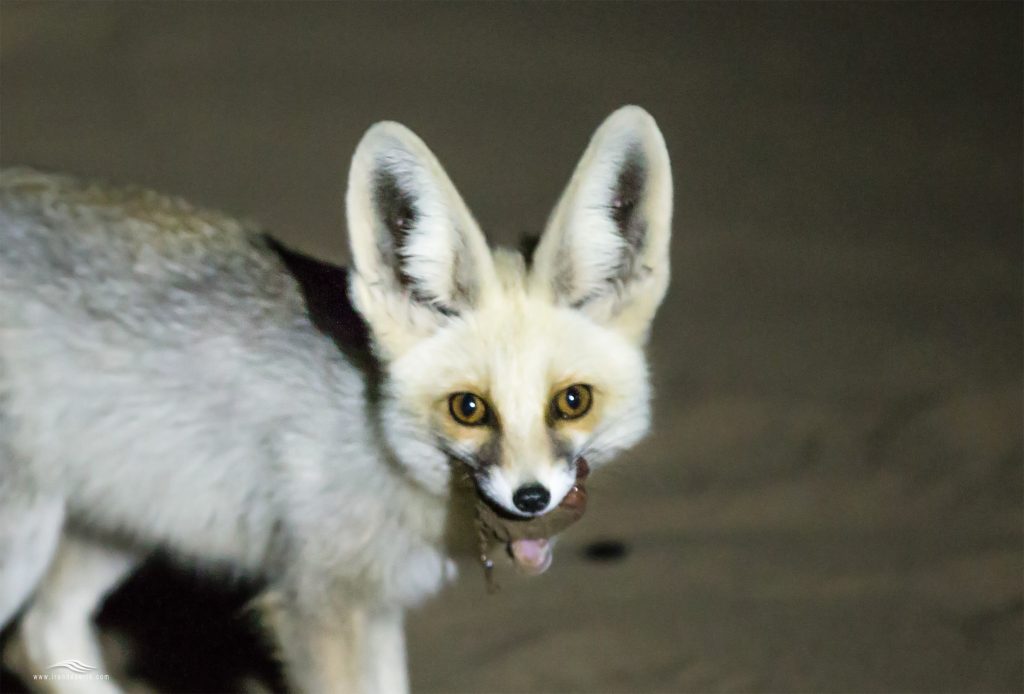
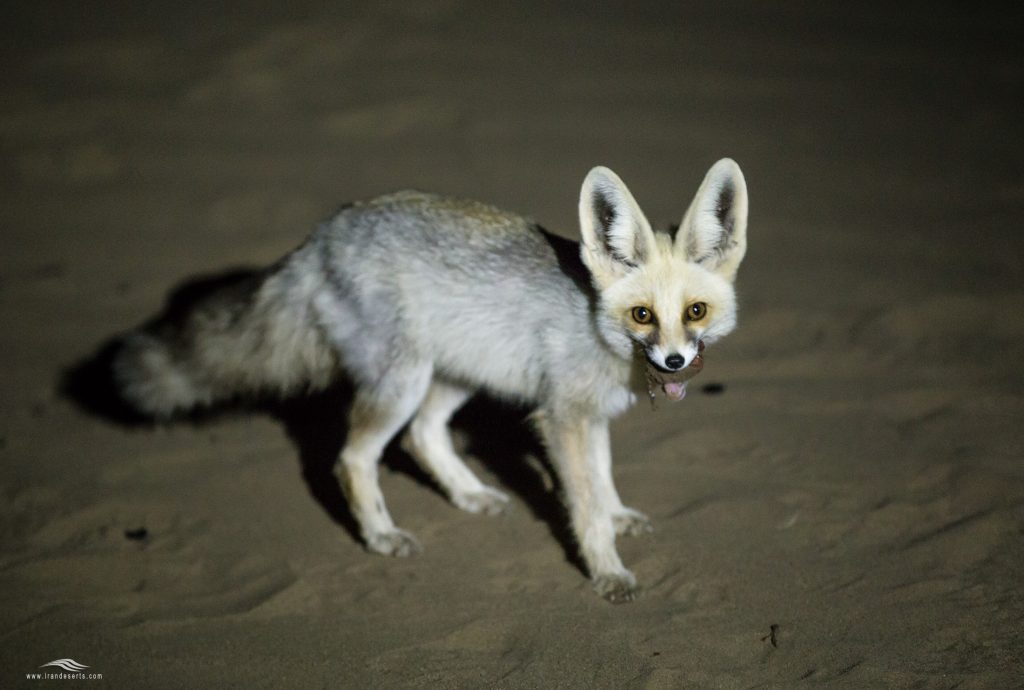
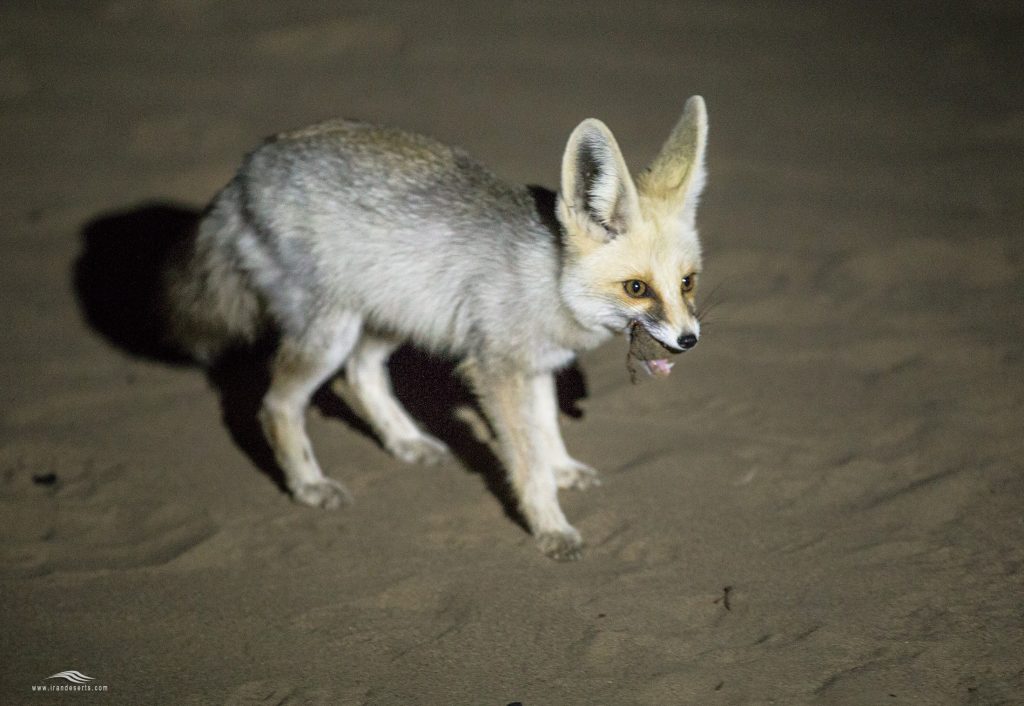
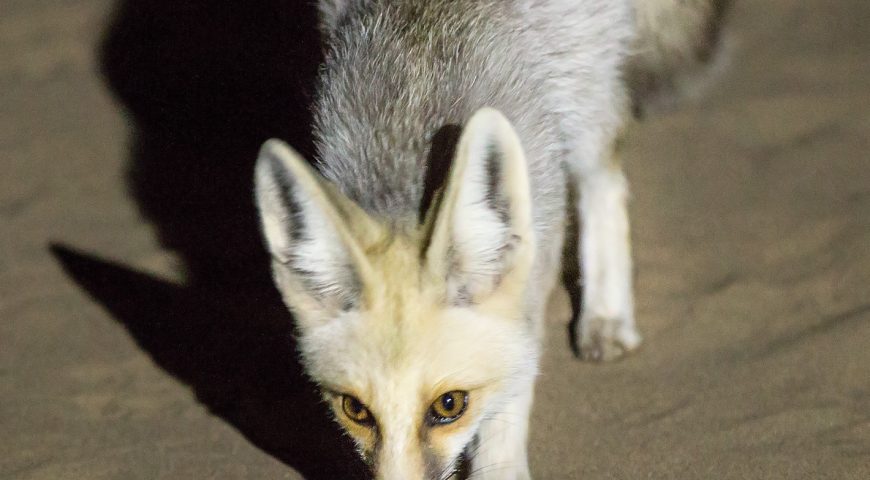
It’s smaller than normal fox, but the ears are larger. The color behind the ears is not typical as of black as other foxes and is often the color of the body or yellowish to orange. The hair is very soft and dense, the color of the back is grayish to the yellow, the color of the hair of the tail is brownish and the end is white. The hands and feet are shorter than normal foxes. There is long hair between the toes of the hands and feet. The presence of a thick layer of fur on the palm of the toe with thick and long hair caused the weight gain to widen at a wider area and the paws would fall far less into soft sands. It also prevents the burning of claws while walking on hot sands. The low weight reaches up to 2 kg and the wide claws allow quick and fast movement on the sand. The fox can change the way it’s moving when it’s running. The body color is cream and gray, which provides camouflage for fox in desert areas.
Their ears are bigger than ordinary foxes. These large ears are instrumental in blowing wind and helping to cool the body of the fox in heat. It also provides a much more powerful hearing aid than other foxes.
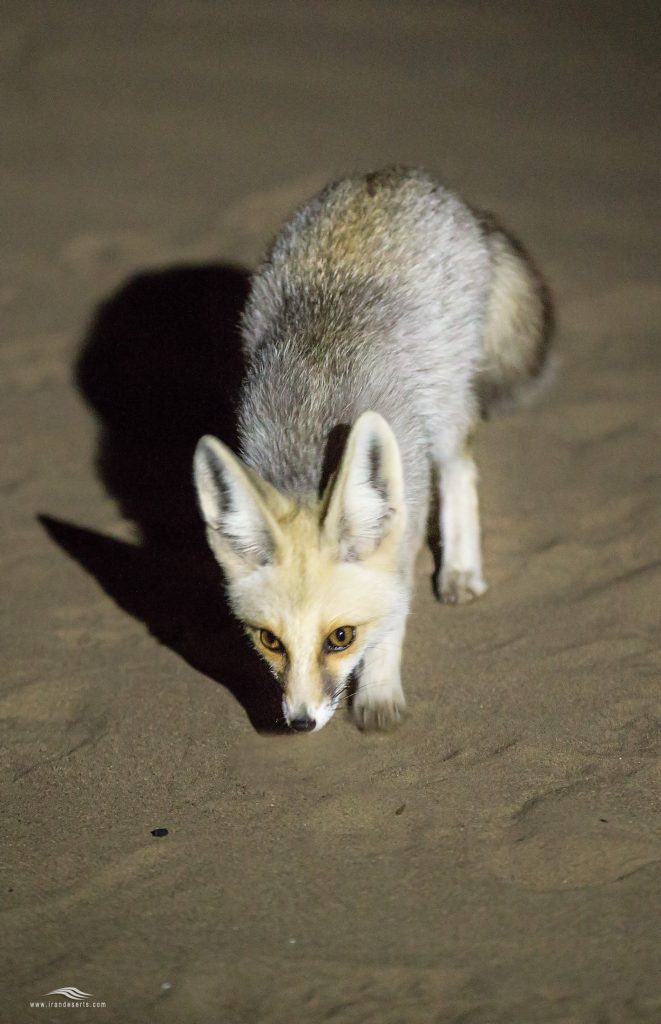
The sand fox lives in the nest dug. Some of the foxes will land their nest. Other foxes may benefit from the nest of other animals, or they may be under the bushes or in the gap of the ancient trees. These foxes dig out tunnels below the sand surface. Their nest remains cool even in the hottest weather. The foxes are very nimble; their nests typically have multiple spans. The use of these openings to have a few escape routes is to escape the enemies. Usually they dug other corridors around the nest to hide in the hallways when they are in danger. These corridors may also have an exit at the other side to escape. Once a year female fox fires two to twelve cubs a year. The mother nurses them for about two months. Father also helps keep cubs. While the cubs are still very small, the father leaves the nest bringing the hunted prey for them. Shortly afterwards, the parents both go to hunt for feeding the puppies. Fox cubs are playful. For hunting sessions, parents bring some easy preys to the nest. Because the six-month-old fox puppets are asked to leave the nest and search for their own food.
In the desert areas, sandy foxes can be found abundantly. The reason is that there are good environmental conditions in the area for them. Conditions such as tropical weather, plains, camouflage tracks and appropriate cover, and the presence of many hunting and food are the most important of these conditions. Other features and habits of this fox look like ordinary fox. Lifespan is in captivity six and a half years.
Head length and trunk 40 to 52 cm, tail 25 to 35 cm, height 25 to 30 cm, weight 2 to 4.5 kilograms.
Desert and steppe areas. 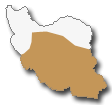
Sand foxes are also visible in most of the desert areas of Iran, even in the warmest part of the world, among the sandy beaches of Rig Yilan. Mehrdad Qazvinian was the first to prove the presence of this fox in Lut by the resurrection of a peduncle in the Lut desert. The lute sand fox is larger than the cat and the hand and foot are shorter, the hair color of its limbs is generally dark gray, and cream to fawn colored hair has covered around the eyes and the large ears, and the forehead and on the muzzle toward underneath its neck is covered by white hair. Under the eyes of this beast, are two black spots of hair nearly as large as their eyes, which distinguishes this species from other peers in other ecosystems.
They can be found in the marginal areas of central desert, Sistan and Baluchestan, Fars, Khuzestan, Bandar Abbas and probably Qeshm Island. The foxes of Qeshm Island differ in appearance from other foxes. Some look like ordinary foxes and some have similarities to sand foxes. So far, no studies have been done on the foxes of Qeshm Island.
North Africa, Saudi Arabia, Afghanistan.
Nightbreak, usually not seen on the day. Lives individually and sometimes in small groups. The sand fox is very curious and does not hesitate to approach human communities.
Feeds on animals such as cockroaches, small rodents, reptiles, insects, carcasses of animals and plant materials such as leaves, juicy grains and nests (in the Rabat Pasabandan area of Yazd, a number of them were eating watermelon). In summer, they sometimes attack farms. Tomatoes and plums are also eaten.
Due to life in desert and remote areas, it does not endanger the generation of the animal. The natural enemy of those larger carnivores is the wolf, the hyena, and the dog. In the years 1980-81, most of the sand festivities of the Kavir National Park were destroyed due to an unspecified, possibly poisonous prey by ranchers to kill the wolves. Hunters occasionally hunt them for their furs.